
Blog
How to Grow Dahlias: Planting Tubers, Care and More Blooms


Dahlias do something almost no other flower does: they start flowering in midsummer, when the first flush of perennials is over, and they keep going until the first frost cuts them down. A single plant can carry thirty blooms in a season, and every one of them is good enough to cut.
They are also unusually easy to keep. Plant a tuber in spring, pinch it once, water it when the weather is dry, and a clump will come back bigger every year for as long as you look after it.
This guide covers the whole cycle — choosing tubers, planting, feeding, pinching, staking, cutting and overwintering — in the order you will actually need it.
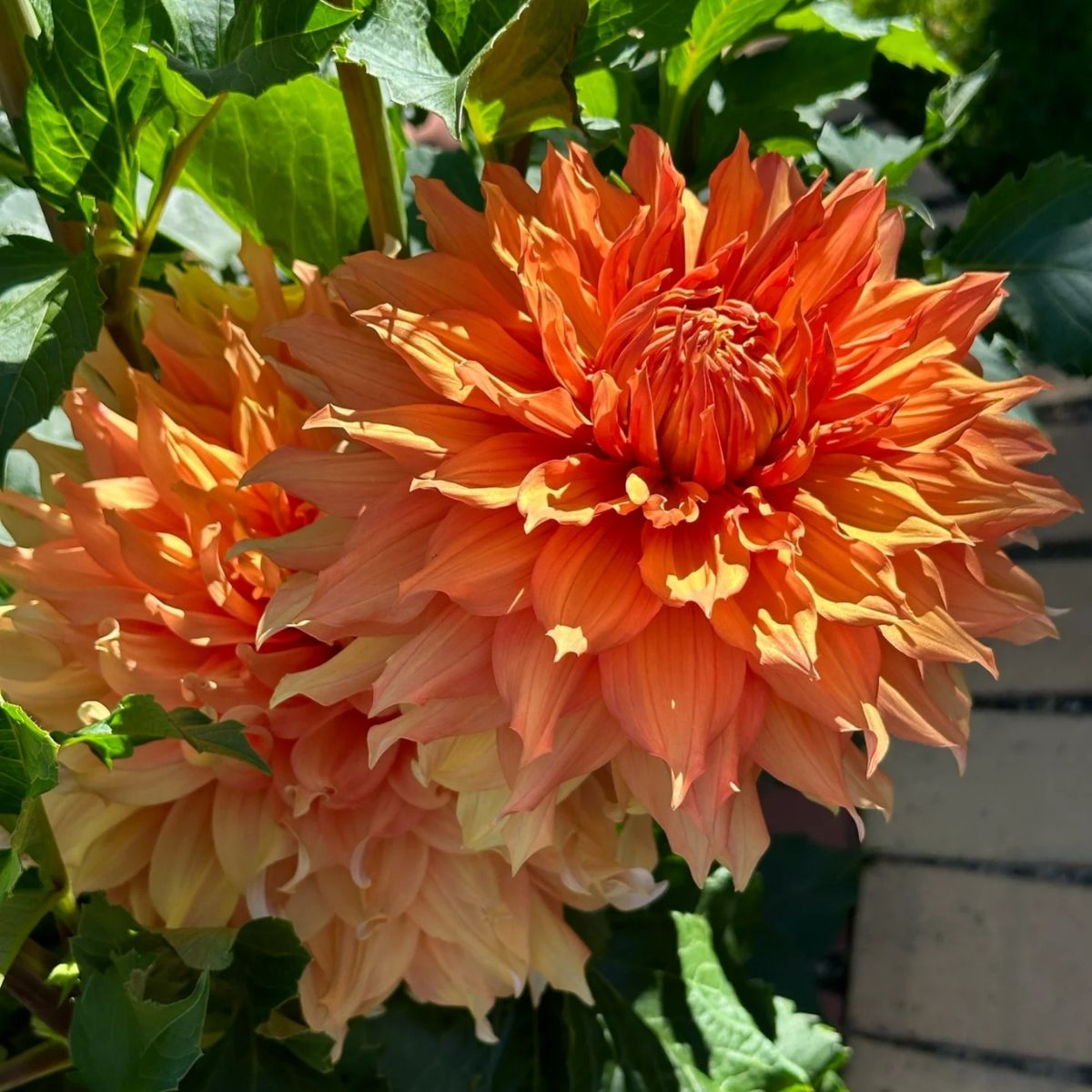
The four things dahlias actually need
Everything else is detail. Get these right and the plants look after themselves.
- Sun. Six hours of direct light minimum, eight is better. Shade produces tall, soft growth and very few flowers.
- Warm soil. Tubers rot in cold, wet ground. Wait until the soil is around 15°C (60°F) — usually two weeks after the last frost.
- Drainage. Free-draining soil, or a raised bed, or a container. Waterlogged tubers are dead tubers.
- Food, but not too much nitrogen. Dahlias are heavy feeders, but nitrogen pushes leaves instead of flowers.
When to plant dahlia tubers
Plant outdoors once the danger of frost has passed and the ground has warmed: late April to mid-May in most of Europe, May in the northern United States, and earlier in warm climates. If you want to get ahead, start tubers in pots indoors three to four weeks before that, in a bright frost-free spot, and plant them out with the shoots already showing.
In USDA zones 8–10 you can also leave tubers in the ground over winter under a thick mulch. Anywhere colder, plan on lifting them in autumn.
Where to plant, and how to prepare the soil
Dig the bed to a spade’s depth and fork in two or three inches of compost. Dahlias are greedy and their tubers need loose ground to swell into, so this is worth doing properly rather than skimming the surface.
If your soil is heavy clay, plant into a mound or use containers. A 12–14 inch pot holds one plant comfortably; anything smaller dries out too fast in August.
Do not plant dahlias where you grew them last year. Soil-borne problems build up, and rotating the bed every two or three years keeps plants healthy.
How to plant a dahlia tuber, step by step
- Dig a hole about 15 cm (6 in) deep and a spade’s width across. In light soil go slightly deeper; in heavy soil plant shallower and mound the soil over the tuber.
- Lay the tuber flat, eye facing up. The eye is the small bump at the top of the crown where the stem will emerge. If you cannot find it, plant flat and trust the tuber to sort itself out.
- Space plants 45–60 cm (18–24 in) apart. Tall varieties need the wider spacing; bedding dahlias can be closer.
- Backfill and firm gently — no stamping. The tuber should sit in soil, not in an air pocket.
- Do not water. This is the single most common mistake. The tuber has no roots yet, so water simply sits around it and rots it. Water only when shoots appear above the soil.
- Label the spot. Dahlias are slow to emerge — two to four weeks — and easy to dig through while you wait.
Watering and feeding
Once shoots are up, water deeply once or twice a week rather than little and often. One proper soak that reaches 20 cm down is worth more than a daily sprinkle, because it teaches the roots to go deep.
Start feeding when the plants are about 30 cm tall and repeat every three to four weeks until flowering starts. Use a low-nitrogen, high-potassium feed — a tomato feed is ideal. Stop feeding in late summer; the plant should be ripening, not pushing soft new growth.
Mulch after the soil has warmed to hold moisture and keep the roots cool. Straw, leaf mould or grass clippings all work.

Pinch out the growing tip for more flowers
This is the single highest-value job in dahlia growing, and most people skip it.
When the plant has three or four pairs of leaves — roughly 30 cm tall — pinch or snip out the top growing point just above a leaf pair. The plant responds by pushing side shoots, and each of those becomes a flowering stem. One pinch typically turns four or five flowers into fifteen or twenty.
Pinch early varieties once, and pinch again on the side shoots if you want a really full plant. Stop pinching about eight weeks before your first expected frost, so the last flush has time to open.
Staking and support
Most dahlias over 60 cm will need support, and the time to put it in is at planting, not after the plant falls over. Push a stout cane in beside the tuber and tie the stem in as it grows, using soft twine in a figure of eight so the stem is not strangled.
For a whole bed, a grid of twine between corner posts at 45 cm and 90 cm does the job and disappears once the foliage fills in.
Deadheading and cutting
Dahlias flower hardest when you cut them. Deadhead faded blooms every few days — cut back to a strong side shoot, not just the flower head — and the plant keeps producing new buds instead of setting seed.
For the vase, cut in the early morning when stems are full of water, choosing blooms that are just opening rather than fully flat. Take stems at least 30 cm long and strip the lower leaves so nothing sits in the water. Dahlias last five to seven days in a clean vase, longer if you change the water every other day and re-cut the stems.
One trick worth knowing: sear the cut end of the stem in a flame for a few seconds, or plunge it into boiling water for ten seconds, then into cold. It stops the milky sap sealing the stem and doubles vase life for the thicker-stemmed varieties.
Digging and storing tubers over winter
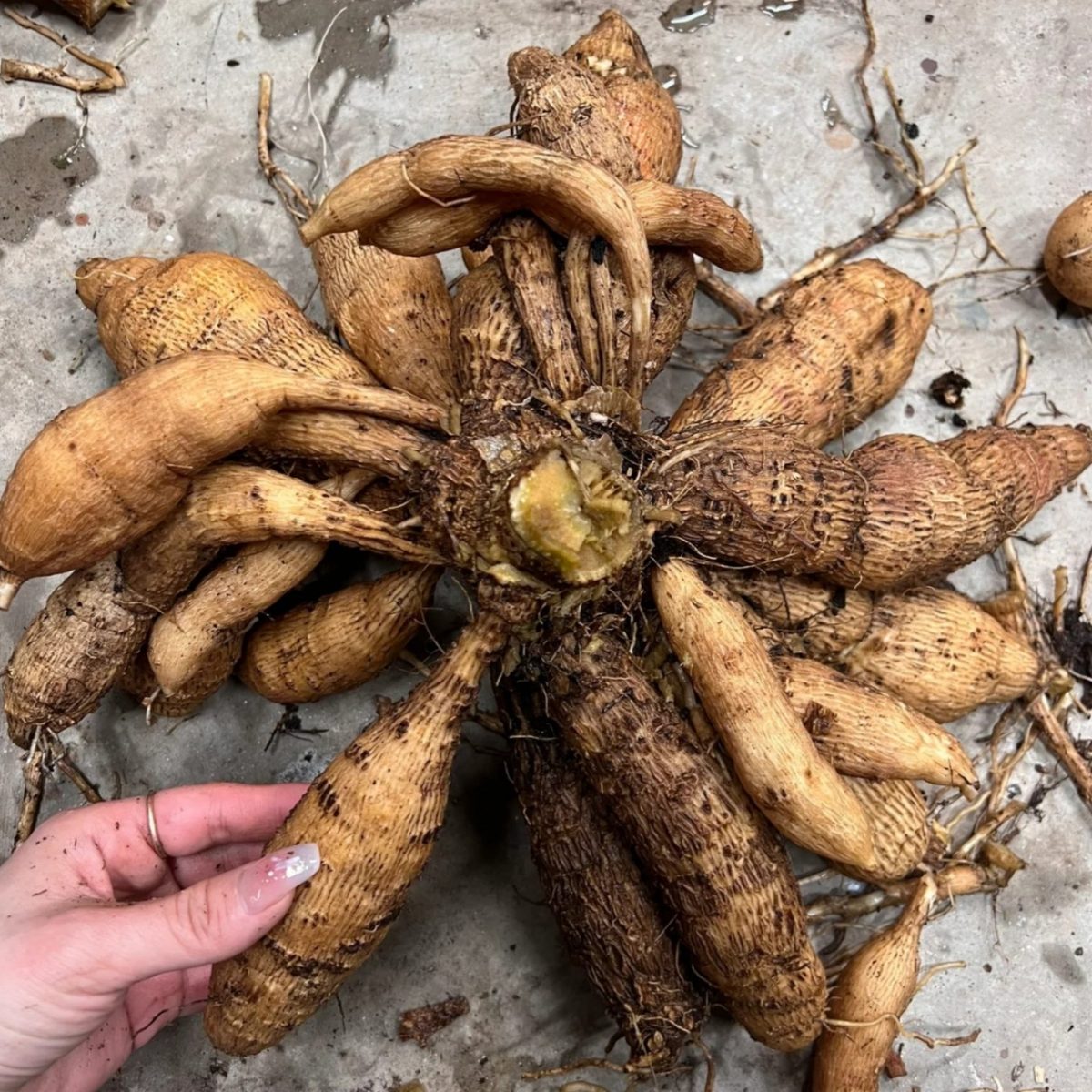
Dahlias are hardy in USDA zones 8–10. Elsewhere the tubers need lifting, and the process is simple if you get the timing right.
- Wait for the first frost to blacken the foliage, then cut stems back to about 15 cm.
- Lift with a fork a spade’s width from the stem, working around the clump so you do not spear the tubers.
- Shake off the soil — do not wash it off, and do not separate the tubers yet. Leave the clump intact.
- Cure for a week in a dry, frost-free place, upside down so water drains out of the stems.
- Store in a box of barely moist compost, sand or vermiculite, at 5–10°C (40–50°F), in the dark. Check monthly and remove anything soft or mouldy.
Label the clumps as you lift them. Every dahlia tuber looks the same in February, and the colour is the whole point.
Pests and problems
Slugs and snails are the main threat to new shoots in spring. Go out at dusk with a torch for the first fortnight after planting, or use a barrier around each plant.
Earwigs chew ragged holes in petals in high summer. A rolled newspaper trap on a cane, emptied each morning, keeps numbers down without spraying.
Aphids and red spider mite build up on dry, still plants. A strong jet of water on the undersides of leaves every few days usually settles it.
Powdery mildew appears as white dusting in late summer, usually where plants are crowded. Improve airflow, water the soil not the leaves, and remove affected foliage.
No flowers at all almost always means too much shade, too much nitrogen, or no pinching. Blind shoots — stems that form a bud that never opens — are usually a sign of stress; cut them off and the plant will try again.
Dahlia types, in one line each
- Dinnerplate: blooms up to 25 cm across on tall plants. Spectacular, and they need real staking.
- Cactus and semi-cactus: narrow, rolled, pointed petals. The most dramatic silhouettes, and excellent for cutting.
- Ball and pompon: perfectly round, tightly packed petals. Compact, weatherproof and long-lasting in a vase.
- Waterlily: flat, layered petals that open like a waterlily. Low and free-flowering.
- Decorative: broad, flat petals in a fully double flower — the classic dahlia shape and the biggest colour range.
Choosing colours that work together
Dahlias come in almost every colour except true blue, which makes planning a border easy. Three approaches that always look right:
- One colour, four shades. Our red dahlias run from clear bright red to near-black maroon; planted together they read as a single mass with depth.
- Sunset gradient. Orange through coral, apricot and peach is the easiest warm planting there is, and it photographs beautifully.
- Cool contrast. Purple and violet against white is the most reliable pairing for evening gardens, because white catches the last light.
Pink and yellow are the two colours that mix with everything else, so they are a safe starting point if you are planting a mixed bed: see pink dahlias and yellow dahlias. All six colour families are also collected on one page under dahlia tubers.
Frequently asked questions
How long after planting do dahlias flower?
About eight to ten weeks. Tubers planted in mid-May typically open their first flowers in mid-July, and keep flowering until the first frost in October or November.
Do I have to dig dahlias up every year?
No, not in zones 8–10, where a thick mulch is enough. In colder zones the tubers freeze, so lift them after the first frost and store them frost-free.
Should I water the tuber straight after planting?
No. Wait until shoots appear. Watering a dormant tuber in cold soil is the fastest way to rot it.
Can I grow dahlias in pots?
Yes — use a pot at least 12 inches across with drainage holes, plant one tuber per pot, and expect to water daily in hot weather. Compact ball and bedding types do best.
Why are my dahlias tall and leafy with no flowers?
Too much shade, too much nitrogen, or no pinching. Give them sun, switch to a high-potassium feed, and pinch out the growing tips.
How many flowers will one plant give?
A well-grown plant in full sun will give 20–40 stems in a season if you keep cutting and deadheading. That is roughly one bouquet a week from a single tuber.
Where to buy dahlia tubers
Our dahlia collection is organised by colour family, each listing with four shades and pack sizes from 2 to 10 tubers — the price per tuber drops as the pack grows. Every tuber is hand-checked, graded and shipped with a visible eye, packed in breathable material with a printed planting guide.
Plant them this spring and you will be cutting flowers by midsummer, with a bigger clump every year after that.
Shop related: Pink Dahlia Bulbs – Pink, Rose & Magenta Shades · White Dahlia Bulbs – White, Ivory & Cream Shades · Orange Dahlia Bulbs – Orange, Coral & Peach Shades