
Blog
How to Plant Daffodil Bulbs in Fall (And Why They Come Back for Decades)

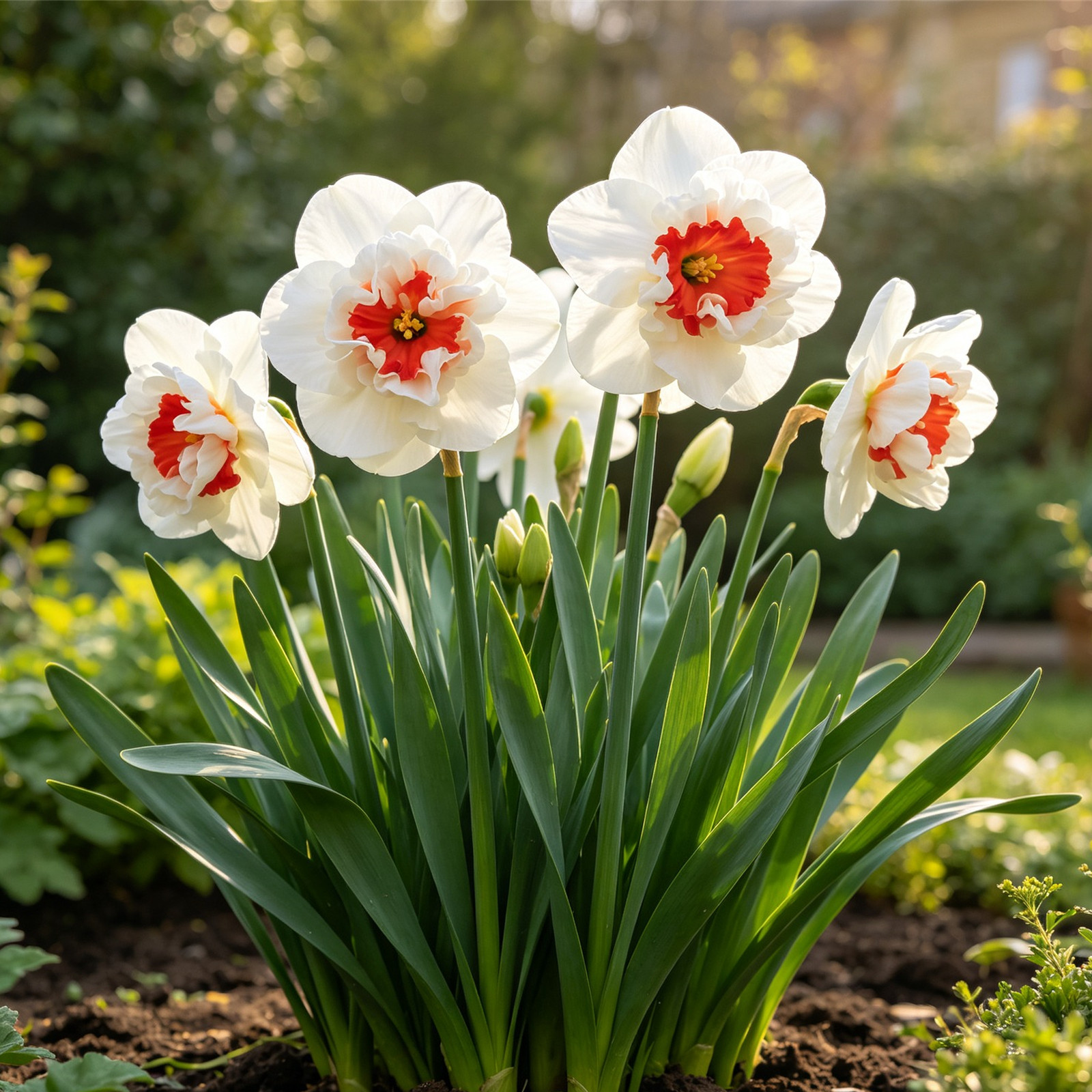
Daffodils are the only spring bulb most people never have to replant. Get them in the
ground at the right depth in autumn and a single bag becomes a drift that doubles every three or
four years, on its own, for decades. Get the depth wrong and you get leaves and no flowers, year
after year, with no obvious explanation.
This guide covers the three things that actually decide whether daffodils flower: depth,
drainage, and what you do (or don’t do) after the flowers fade.
When to plant
Plant when the soil has cooled but before it freezes – roughly four to six weeks before your
first hard frost. In most of the U.S. that means late September through November.
Bulbs planted in September root before winter and flower earliest; bulbs planted in December
usually still flower, just later and shorter.
The bulb needs soil temperature below about 15 C / 60 F to break dormancy properly. Planting
too early in warm soil is one of the few ways to genuinely fail with daffodils.
Depth: the single most important number
Plant at three times the bulb’s own height. A top-size daffodil bulb is
roughly 5 cm / 2 inches tall, so the base of the bulb sits about 15 cm / 6 inches below the
surface. The pointed end goes up.
Too shallow and the bulb heaves out of the ground in frost, dries out in summer, and often
flowers in its first year then never again. Too deep and the shoot runs out of energy before it
reaches the light.
If you are planting in heavy clay, plant slightly shallower and dig in grit. If you are
planting in sand or a raised bed, go slightly deeper.
Spacing
Ten to fifteen centimetres apart is the usual advice, and it is fine. Two things worth knowing:
- Closer spacing gives a fuller first spring but a clump that needs lifting
sooner. Fifteen centimetres buys you an extra two or three years before division. - Plant in odd-numbered groups of five or more. A single daffodil looks like a
mistake; nine looks deliberate.
Drainage matters more than soil richness
Daffodils rot in wet soil. They do not need rich soil – they need soil that drains. If water
sits in the hole for more than a few minutes when you fill it, plant somewhere else or build the
bed up.
They will flower in ordinary garden soil with no feeding at all in the first year. If you want
to feed, do it when the shoots first break ground in late winter, not in autumn.
The six-week rule after flowering
This is where most daffodil plantings quietly fail. After the flowers fade, the leaves keep
working for about six weeks, sending energy down into the bulb for next year’s flower. Cut them
off early and you get leaves but no flowers the following spring.
So: deadhead the flowers, but leave the foliage alone until it has yellowed and gone
flat on the ground. Then cut it. Not before.
If the dying foliage bothers you, plant daffodils behind perennials that leaf out late –
hostas, hardy geraniums, echinacea. They cover the yellowing leaves exactly when you want them
covered.
Why deer and rabbits leave them alone
Every part of a daffodil – bulb, leaf, stem, flower – contains lycorine and other alkaloids
that are toxic to mammals. Deer, rabbits, squirrels and voles learn this quickly. In practice
daffodils are the most reliably deer-proof spring bulb there is, which is why they are worth
planting in numbers on any property with pressure.
The one exception is the bulb itself, which squirrels will occasionally dig up and then
abandon. Planting deeper, and watering the bed in after planting so the soil settles, largely
solves it.
Do they come back?
Yes – and this is the real argument for daffodils over tulips. A tulip is treated as an annual
by most gardeners because it declines after year one. A daffodil naturalises: the original bulb
splits, the clump thickens, and the flower count goes up.
After three or four years a clump can become crowded enough that flowering drops. That is your
cue to lift and divide it – dig the whole clump just after the foliage dies back, separate the
bulbs, and replant immediately at the same depth. You will get two or three new clumps from one.
Growing in pots
Daffodils work in containers, with one caveat: pots freeze solid, and a frozen pot is a wet
pot when it thaws. Use a generous pot, bury the bulbs at the same three-times-depth, and make
sure the drainage holes actually drain. In zone 5 and colder, either sink the pot into the ground
for winter or move it into an unheated garage after the first frost.
How many bulbs do you need?
A useful rule: six bulbs per square foot for a dense display, three for a
looser naturalistic look. A 1 m / 3 ft wide bed along a path, four feet long, takes about 70
bulbs for the dense version.
Where to buy
We ship top-size daffodil bulbs in packs of
4,
6,
8,
10 or
15, in thirteen colour
combinations from the classic white-and-red to near-black with a magenta cup.
Every order ships free within the U.S. and is covered by our 30-day arrive-alive guarantee.