
Blog
Albuca Spiralis: How to Grow the Spiral Grass That Curls on Its Own

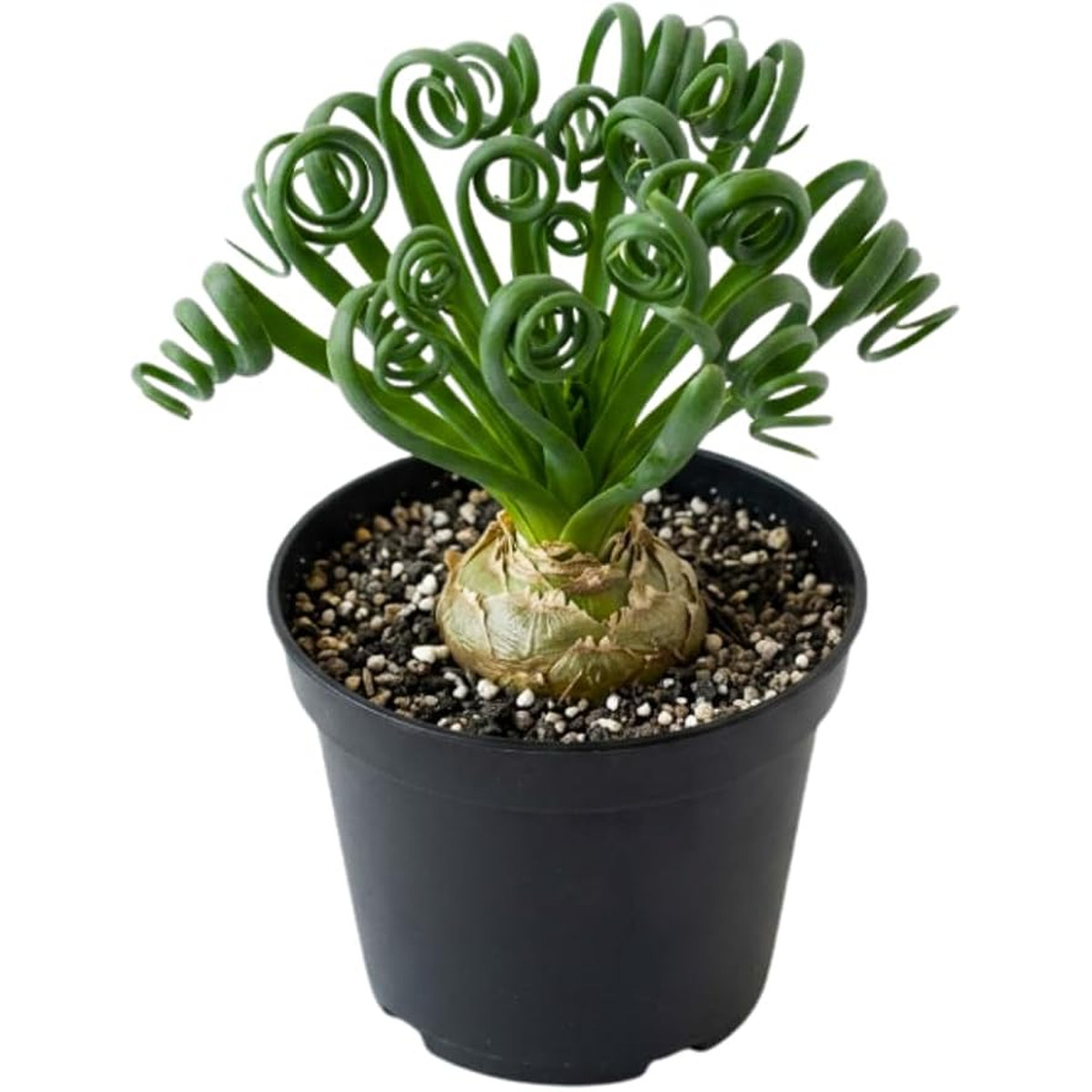
Most houseplants ask you to keep them alive. Albuca spiralis asks you to
let it die back on purpose, then forget about it for four months. Get that rhythm right and it
spirals, flowers, and comes back bigger every autumn without any real effort.
The plant is a South African bulb from the winter-rainfall Cape. Its thread-thin leaves coil
into tight green corkscrews as they extend, and the tighter the coil the more light the plant
is getting. In late winter it pushes up a spike of nodding cream-and-green bells, then the
leaves yellow, and the whole thing vanishes underground until the next cool season.
Why the leaves curl (and why yours might not)
The spiral is not a fixed feature. It is a response to light and to how fast the leaf grows
against its own structure. Three things flatten the curl:
- Not enough light. A windowsill that faces north, or a spot three feet back
from a south window, gives you leaves that unfurl into loose waves. Put it in the
window, touching the glass if you can. - Too much nitrogen. Rich compost pushes fast soft growth that straightens
out. A lean, gritty mix and a light hand with feed keeps the coils tight. - Warmth at the wrong time. The bulb wants cool nights. A room held at 24 C
through the night produces floppy growth even in good light.
The single most useful thing you can do is give it a south or west window and stop feeding
it after the first shoot hardens off.
Planting the bulbs
Albuca bulbs arrive dormant and bare-root. They are small – roughly the size of a small
shallot – and they look unremarkable. That is normal.
Use a pot only slightly wider than the bulb. A 4 inch pot holds one bulb comfortably; a
shallow bowl holds three or four with a little space between them. The mix matters more than
the pot: aim for roughly two parts pumice or coarse grit to one part compost. This plant rots
in dense soil far more often than it dries out.
Set the bulb with the neck just at or barely above the soil line. Burying it deeper is the
most common way people lose these. Water once, then leave it alone until you see the first
green tip.
The growing season, month by month
Autumn: waking up
Cool nights trigger growth. Once the first shoot appears, water lightly and increase as the
leaves extend. By mid-autumn you should be watering when the top inch of mix dries – roughly
once a week in a cool room, more often in a warm one.
Winter: the payoff
This is when the spiral is at its best and when the flower spike appears. Keep it cool,
keep it bright, and keep watering. A cool conservatory or an unheated spare room suits it
better than a living room.
Spring: fading out
As the light strengthens the leaves start to yellow from the tips. This is not a problem –
it is the plant shutting down. Stop watering when you see the first yellowing.
Feed nothing. Let the foliage dry completely before you cut it.
Summer: the four-month nap
Once the leaves are gone, the pot can sit dry and dark. A shelf in a garage, a cupboard, or
simply the back of a shaded bench works. Do not water it. Do not repot it. Do not dig it up to
check on it.
This is the step people skip, and it is why so many spiral grasses sulk instead of spiralling.
The dry rest is what resets the bulb for the next season.
What goes wrong
The leaves are wavy, not spiralled
Light, almost always. Move it closer to the glass. If it is already at the window, the issue
is likely temperature – the plant is growing too fast in too-warm air.
The bulb is soft or mouldy
Water sitting against the bulb. Either the mix is too dense, the pot has no drainage hole,
or the bulb was buried too deep. Unpot it, cut away anything soft, let it callous for two days,
and repot into grittier mix with the neck higher.
It never flowers
Flowering needs a bulb of flowering size and a proper cool winter. A bulb that stayed warm
and wet through the winter will grow leaves and skip the spike. Give it a cool season and it
will usually flower the following year.
It did not come back in autumn
Usually the bulb rotted during the summer rest – someone watered a dormant pot. Occasionally
the bulb was simply too small to survive its first dormancy. Start with a firm, heavy bulb and
keep the summer pot bone dry.
Is it a good houseplant?
Yes, with one caveat: it is a houseplant for people who can leave things alone. If you are
the type who waters on a schedule regardless of whether the plant is growing, this one will
punish you. If you can accept a plant that is spectacular for six months and literally not
there for the other six, it is one of the most distinctive things you can put on a windowsill.
The spiral is the whole point. Nothing else in the houseplant trade looks quite like a pot of
green corkscrews, and no amount of styling reproduces it – the plant either has the light to
coil or it does not.
Where to get bulbs
We ship Albuca spiralis bulbs bare-root and dormant, in packs of
2,
4,
6 or
8, with a 10-bulb bulk
option on each listing. Every order ships free within the U.S. and is covered by our 30-day
arrive-alive guarantee.