
Blog
Rain Lily Care: How to Grow Zephyranthes That Bloom After Every Rain

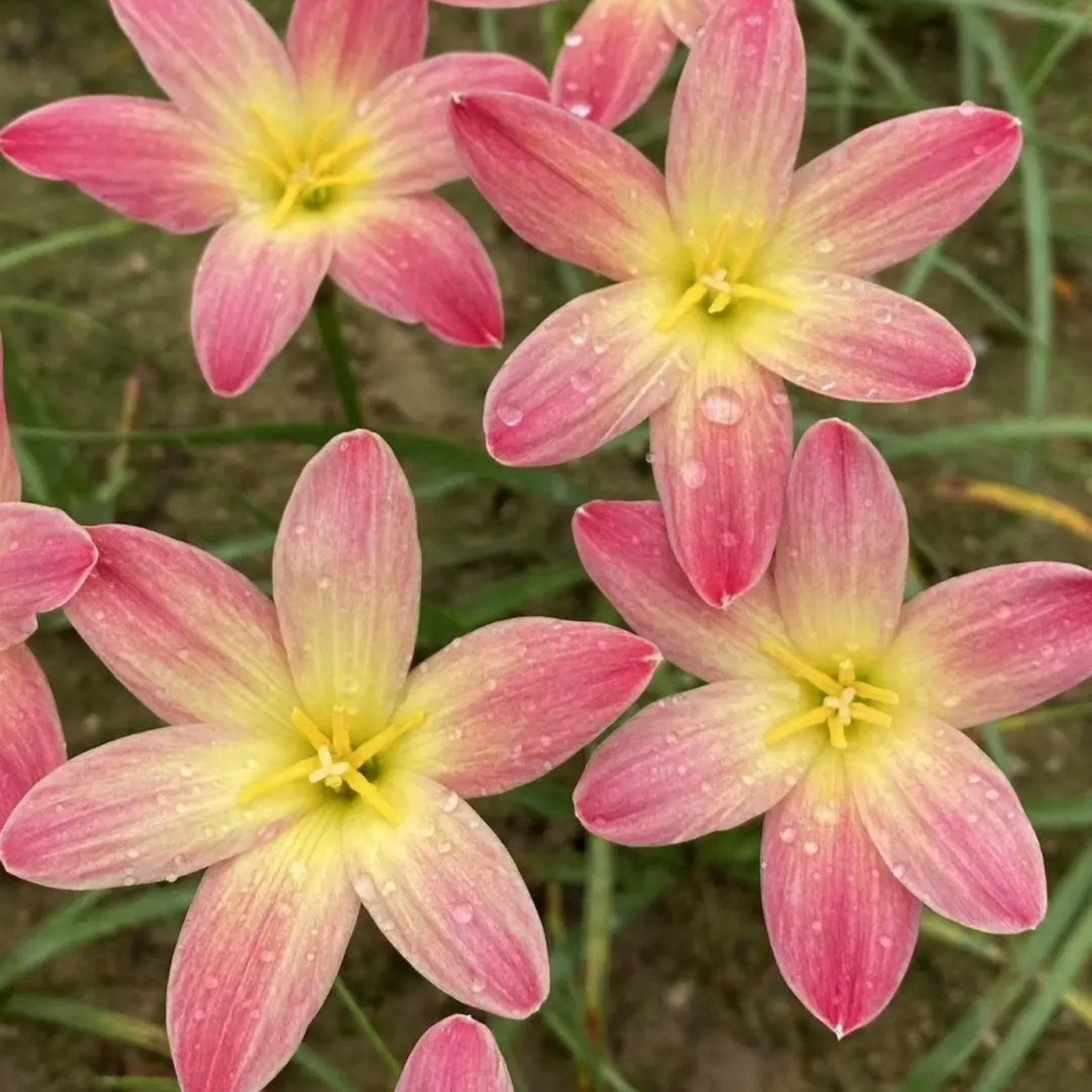
Rain lilies are the most underrated bulb you can put in a garden. You plant them once, forget about them for a month, and then a summer thunderstorm rolls through and three days later the beds are full of colour — without you doing anything. That trick, flowering on demand after rain, is what gives them their name.
This guide covers the whole cycle: planting, the watering rhythm that triggers blooms, dividing crowded clumps, and getting them through winter. It is written for gardeners in zones 7–10, with notes for colder areas at the end.
What rain lilies actually are
The name covers two closely related genera: Zephyranthes and Habranthus. Both are small bulbs in the amaryllis family, both flower on bare stems just above grassy foliage, and both are triggered by the swing from dry soil to soaking wet. Gardeners call them rain lilies, zephyr lilies or fairy lilies. They are not true lilies and they are not daylilies, despite the leaves looking similar.
A single bulb is small — roughly 2–3 cm across — which is why they are sold in packs and why you should plant them in groups rather than one here and one there. Ten bulbs in one square foot looks like a plant. One bulb on its own looks like a mistake.
When they bloom, and why it is not on a schedule
Most varieties flower from July into October, but the timing is triggered rather than calendar-driven. A dry spell followed by deep watering (or real rain) pushes up flowers in two to four days. That is why two gardens a street apart can flower a week apart: it depends on when each one got soaked.
If you want flowers for a specific date — a party, a photo shoot — stop watering for ten days, then flood the pot. You can usually force a flush within a week.
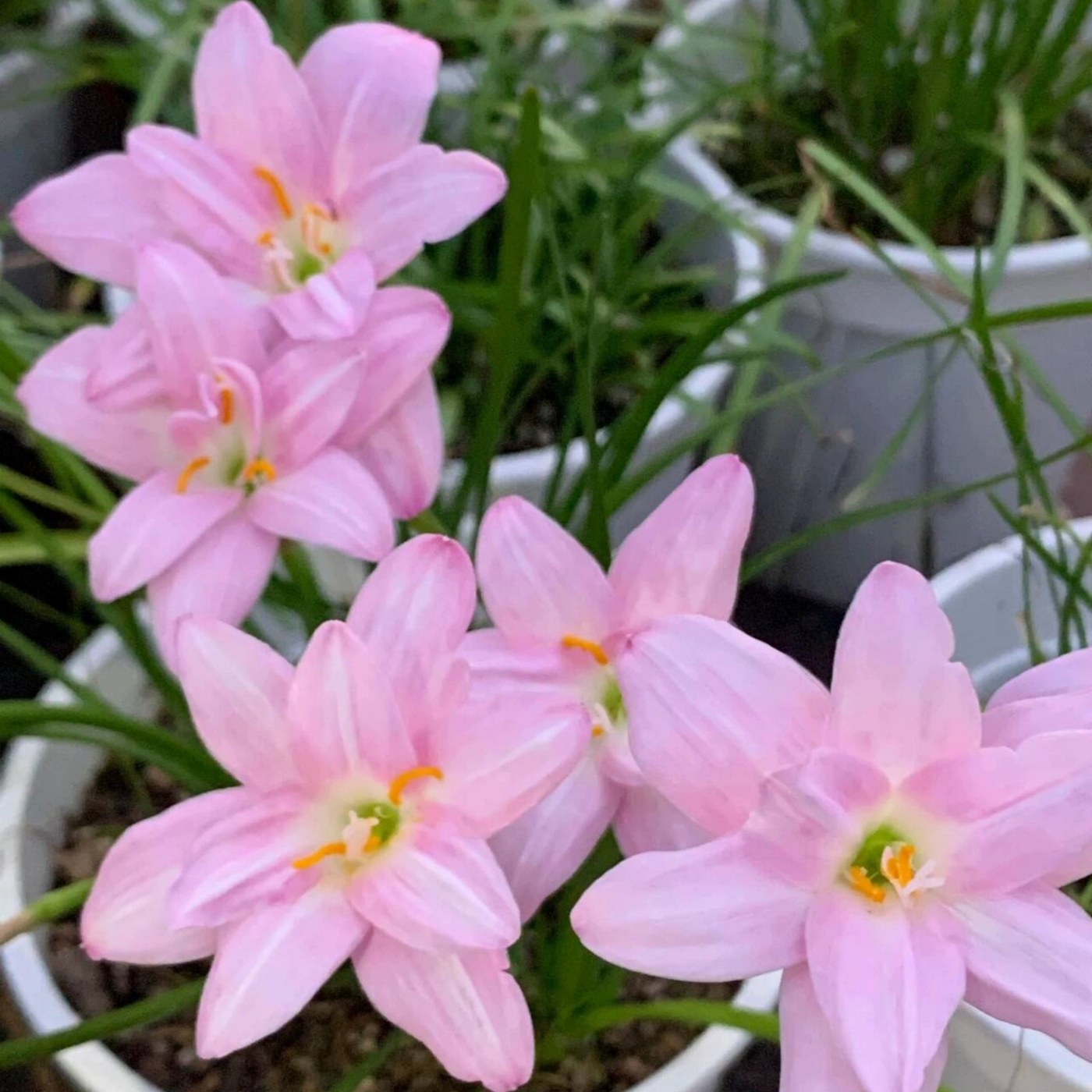
Planting: the two things that matter
Sun. Full sun gives the most flowers. Half a day is workable; deep shade gives leaves and almost no blooms.
Drainage. This is where most people lose them. Rain lilies rot in cold, wet clay. Plant on a slope, in a raised bed, or in a pot with a gritty mix. If your soil holds water in winter, pots are safer than ground.
Set bulbs with the neck at or just below soil level, 3–4 cm deep, 8–10 cm apart. Unlike tulips and daffodils, depth is not critical — drainage is. Water once after planting, then leave them alone until shoots appear.
The dry/wet rhythm that makes them flower
Once established, rain lilies want to be ignored. Water them through their first month while roots form, then treat them mean:
- Let the top 5 cm of soil dry out completely between waterings
- In midsummer, push it further — a full week or two of dry soil
- Then soak until water runs out of the pot, and repeat once the flowers fade
Constant moisture is the classic mistake. It produces soft leaves, few flowers and, in winter, rot.
In pots and in the ground
Pots are the easiest way to control the wet-dry cycle, and they let you move plants under cover for winter. Use a container at least 20 cm deep and a mix of two parts compost to one part perlite. Crowding is fine — rain lilies flower better when slightly pot-bound.
In the ground, plant them where you can see them from the house, because a flush lasts only a few days. A drift along a path edge or at the front of a border works better than a mixed bed, where the foliage disappears among perennials.

Dividing crowded clumps
After two or three years a clump gets tight and flowering drops. Lift it in early spring, just as new shoots appear, and pull the bulbs apart with your fingers. Replant the biggest at the original spacing and give the rest to a neighbour. Unlike most bulbs, rain lilies tolerate division at almost any time, but spring is kindest.
Winter care by zone
- Zone 8–10: leave them in the ground. They need no protection beyond drainage.
- Zone 7: mulch 5 cm deep after the foliage dies back, and keep the bed dry.
- Zone 6 and colder: grow in pots and move them into a cool, frost-free garage or porch at 5–10°C. Keep the mix almost dry; a little water once a month is enough.
Do not cut green leaves off in autumn. They are feeding the bulb for next year, and they die back on their own.
Problems, quickly
Lots of leaves, no flowers. Too much shade, too much nitrogen, or never allowed to dry out. Fix the water rhythm first.
Bulbs turn to mush. Winter waterlogging. Lift what is left, discard the soft ones, replant into grit or a pot.
Leaves vanish in summer. Normal between flushes. Zephyranthes go semi-dormant and come back with the next rain.
Choosing colours
We keep six colour lines, each with four shades, so you can build a drift without repeating yourself:
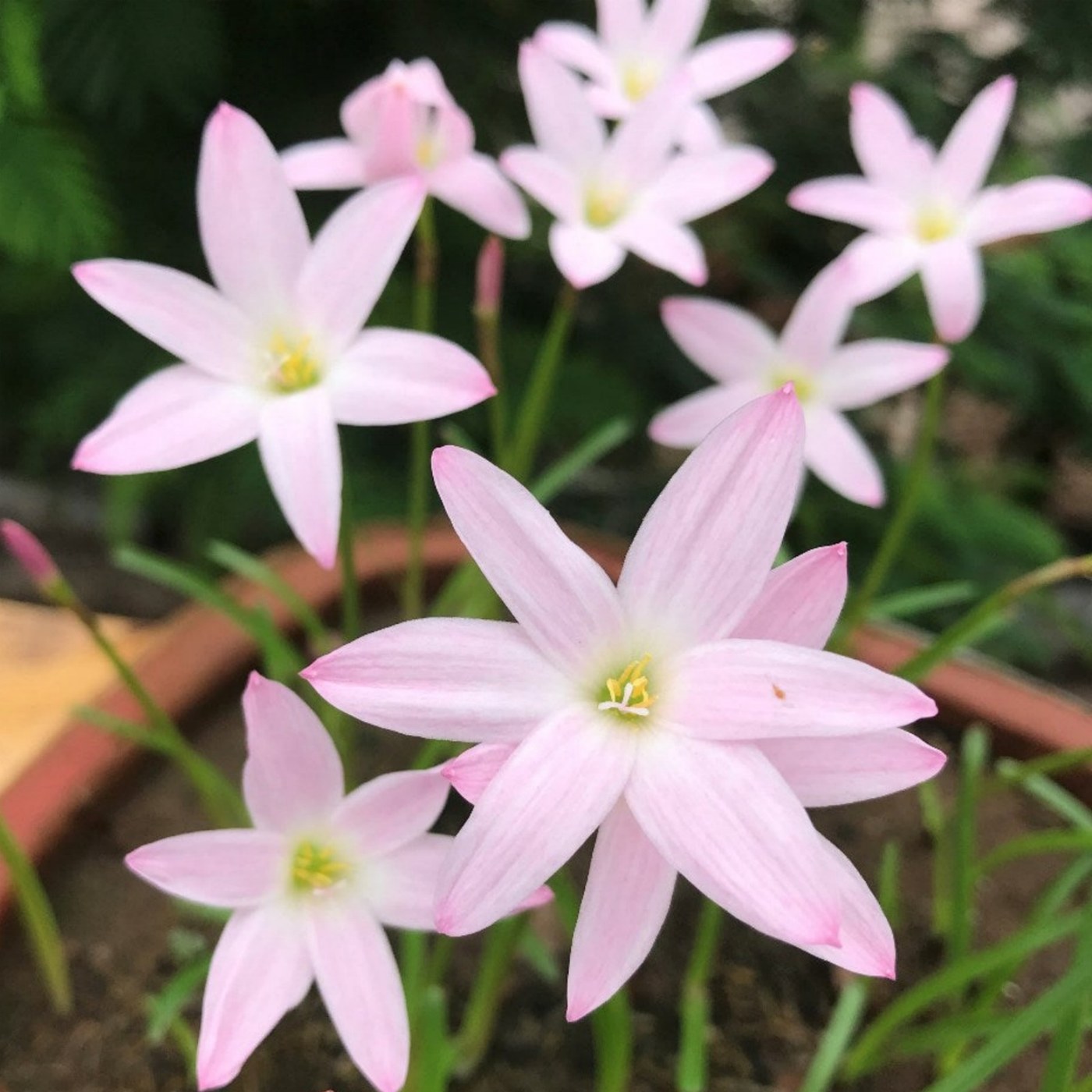
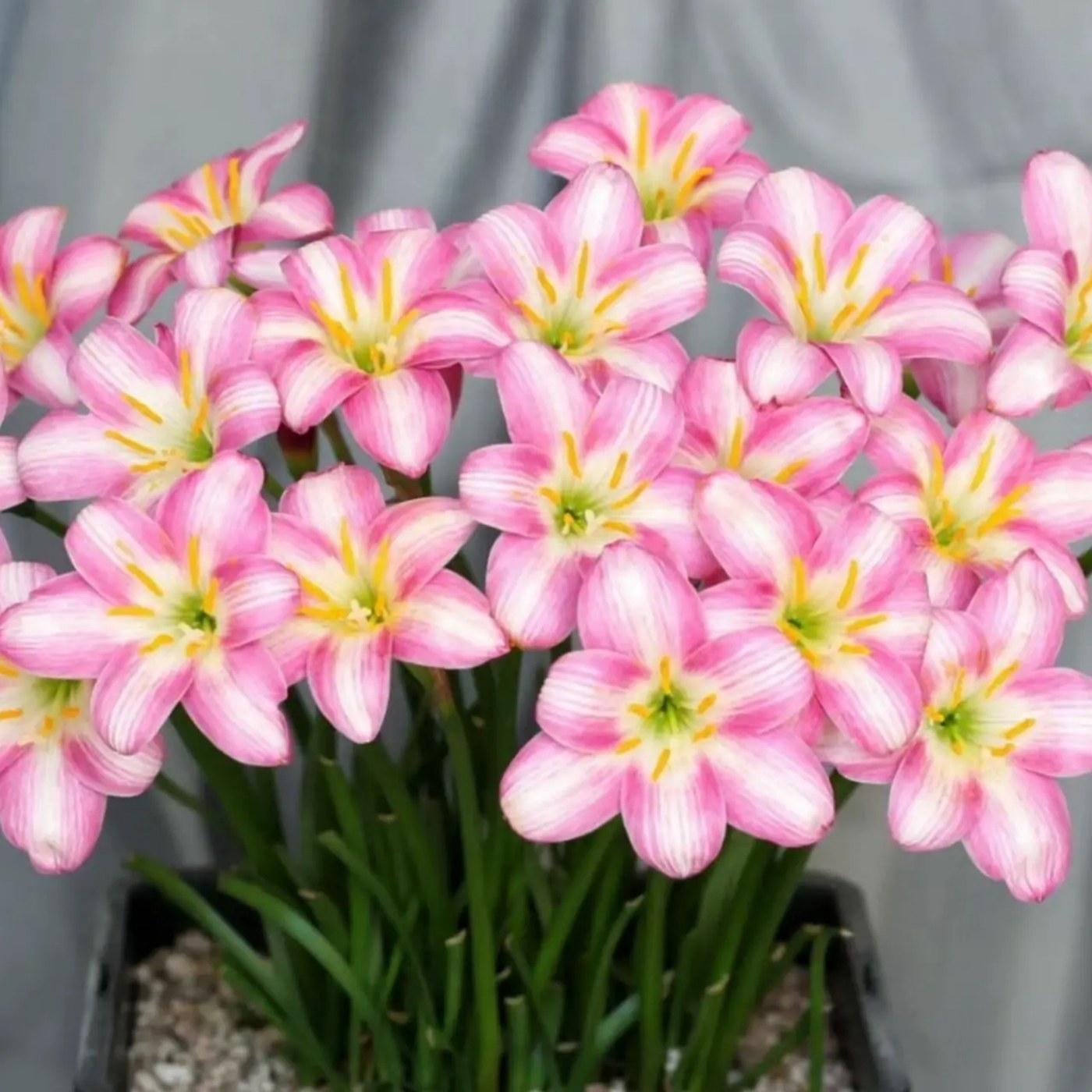
- Pink rain lilies — blush, rose, hot pink and magenta
- Red rain lilies — scarlet through deep red
- Yellow rain lilies — lemon to golden
- White rain lilies — pure white to cream
- Orange rain lilies — apricot, tangerine and coral
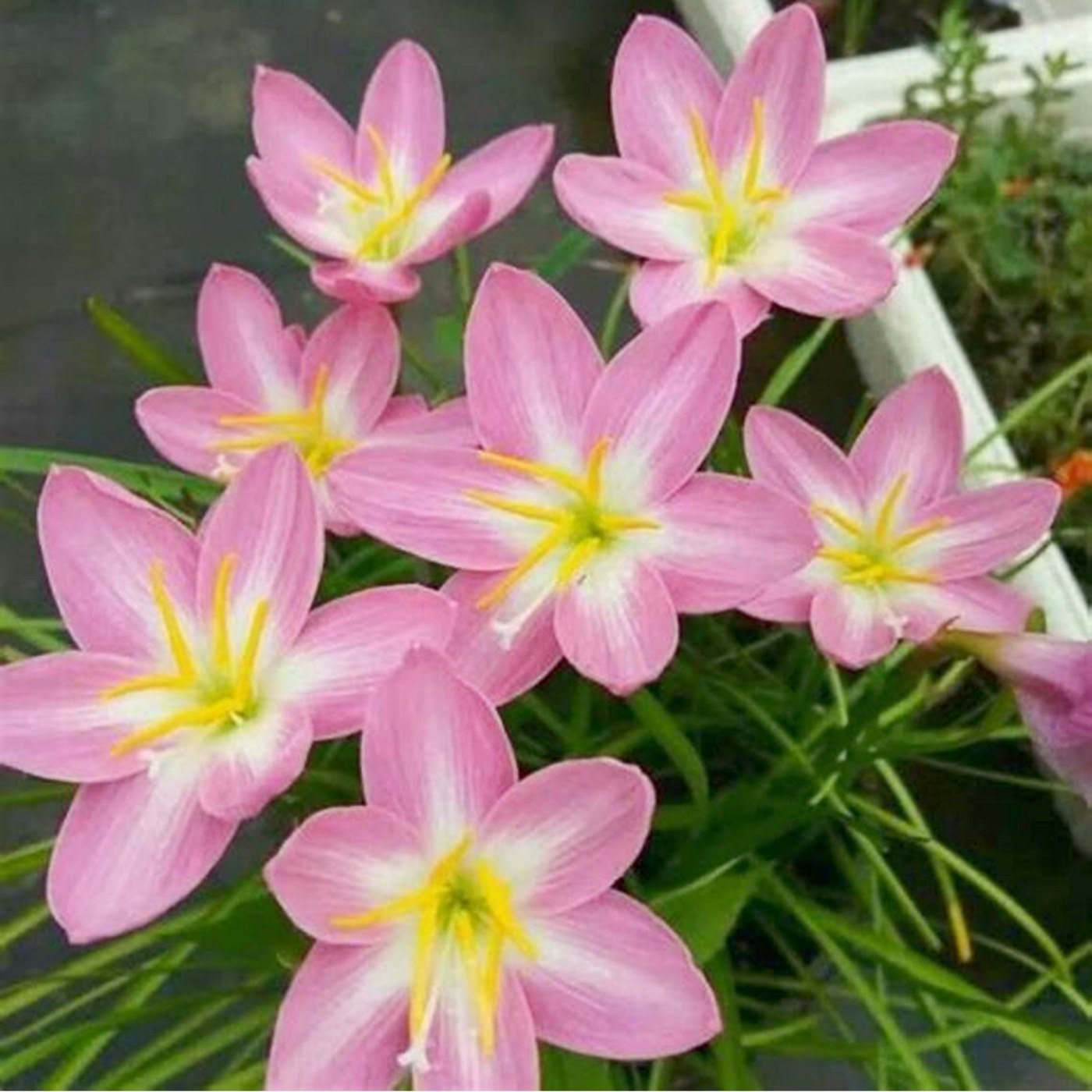
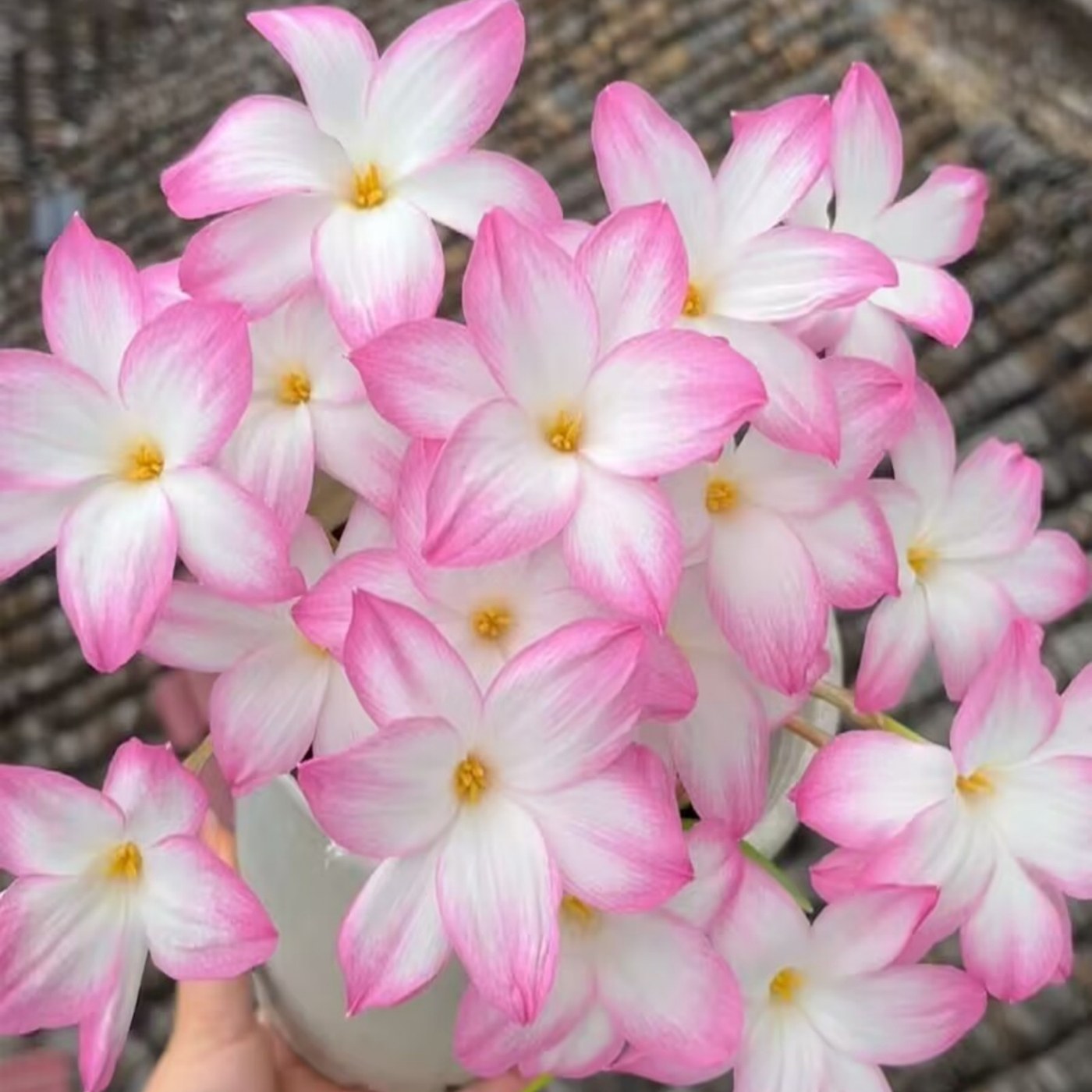
- Bicolor rain lilies — pink and white two-tones
Browse the whole rain lily collection if you would rather mix and match by pack size.
More from the garden
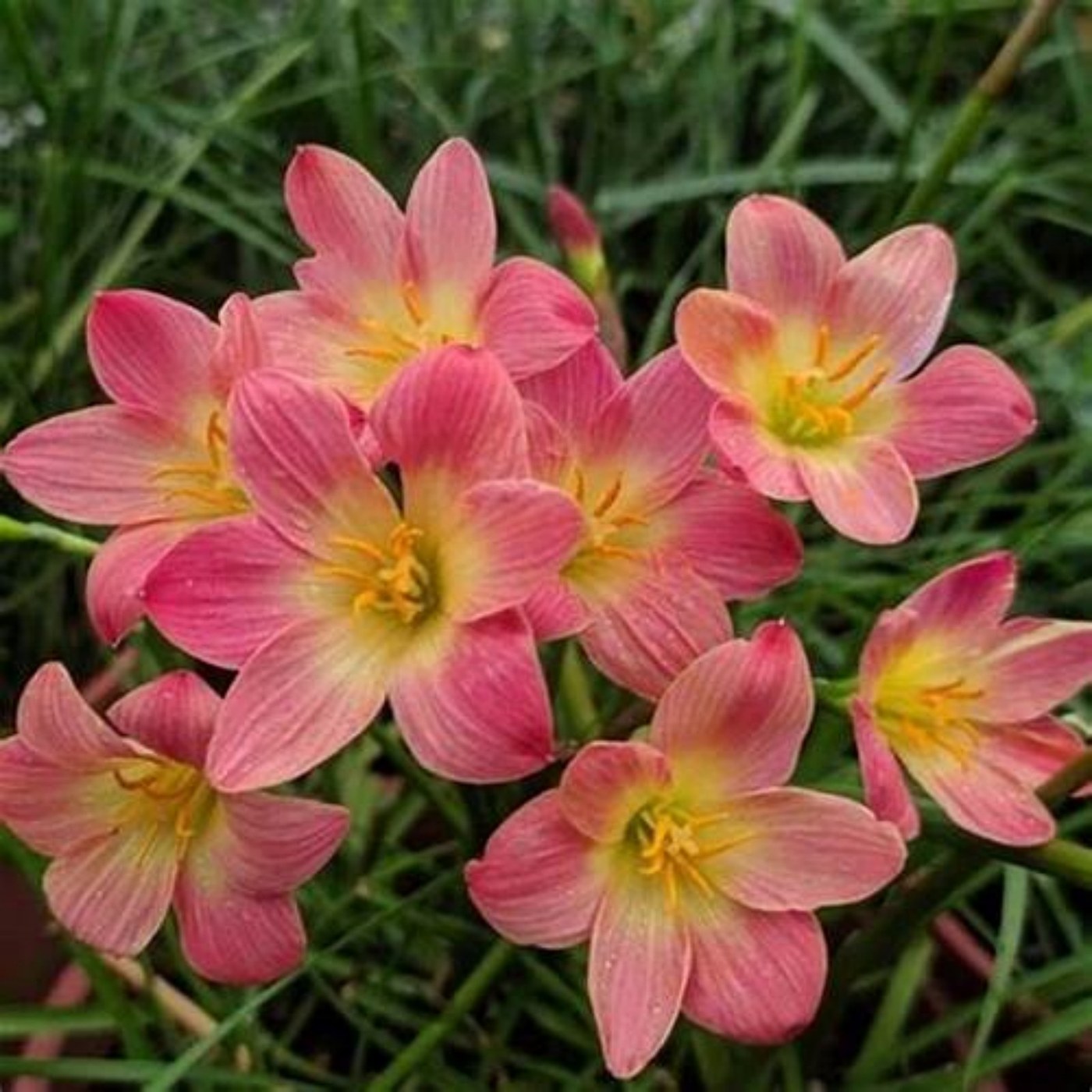
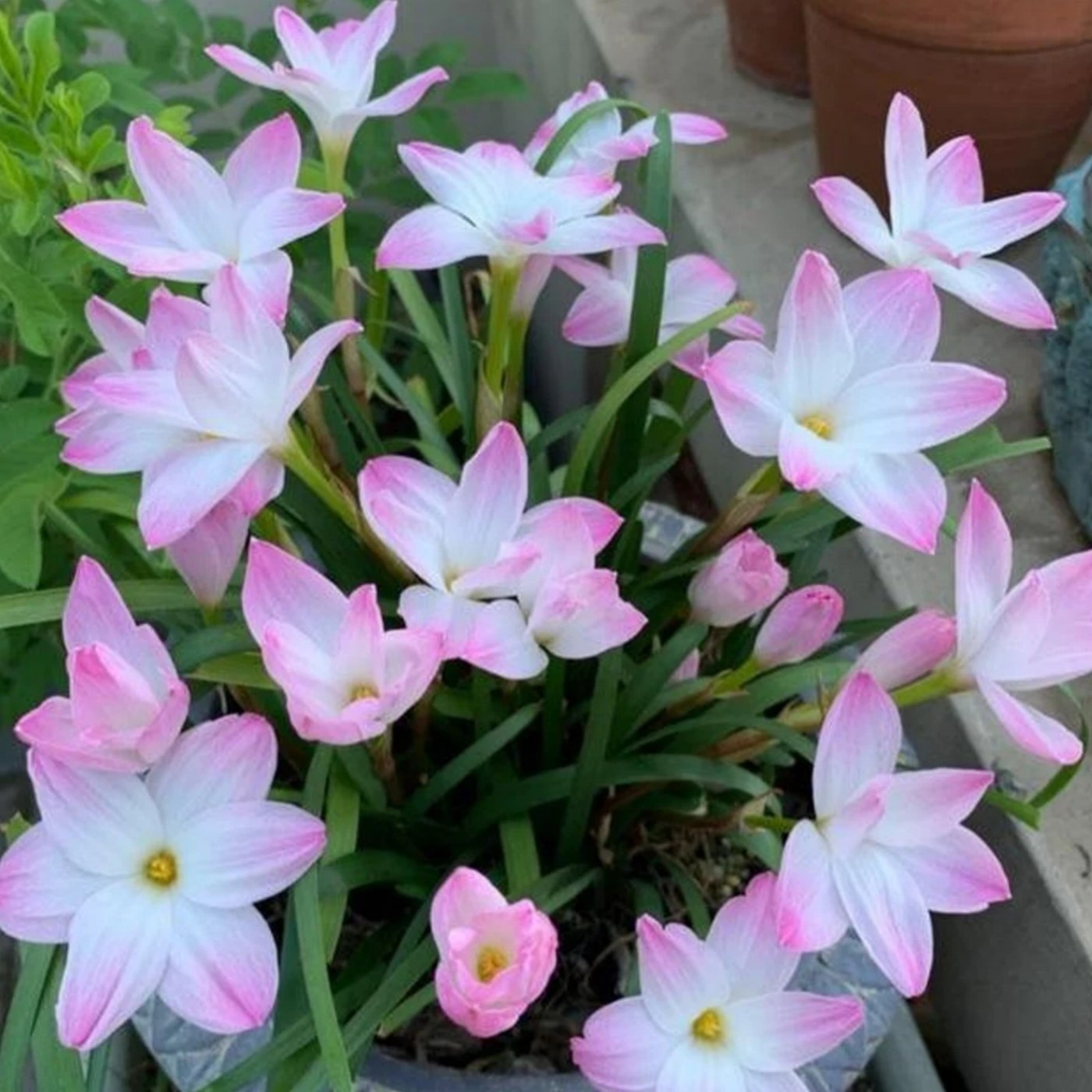
Rain lilies are at their best in company. A row along a warm path, a pot by the door, a clump that appears out of nowhere in the lawn — all of these work because the flowers sit on bare stems above the foliage.

Quick answers
How deep do I plant rain lily bulbs? Three to four centimetres, with the neck level with the soil. Drainage matters far more than depth.
How long until they flower? Bulbs planted in spring usually flower the same summer. Expect the first flush four to six weeks after planting.
Do they come back every year? Yes, in zones 7–10, and they multiply. In colder zones treat them as pot plants and store them frost-free.
Are they poisonous to pets? Rain lilies contain lycorine and are toxic if eaten, so keep pots away from dogs and cats that chew.
Every plant ships with our 30-day arrive-alive guarantee.