
Blog
Growing Allium ‘Gladiator’: The Giant Ornamental Onion That Comes Back Every Year

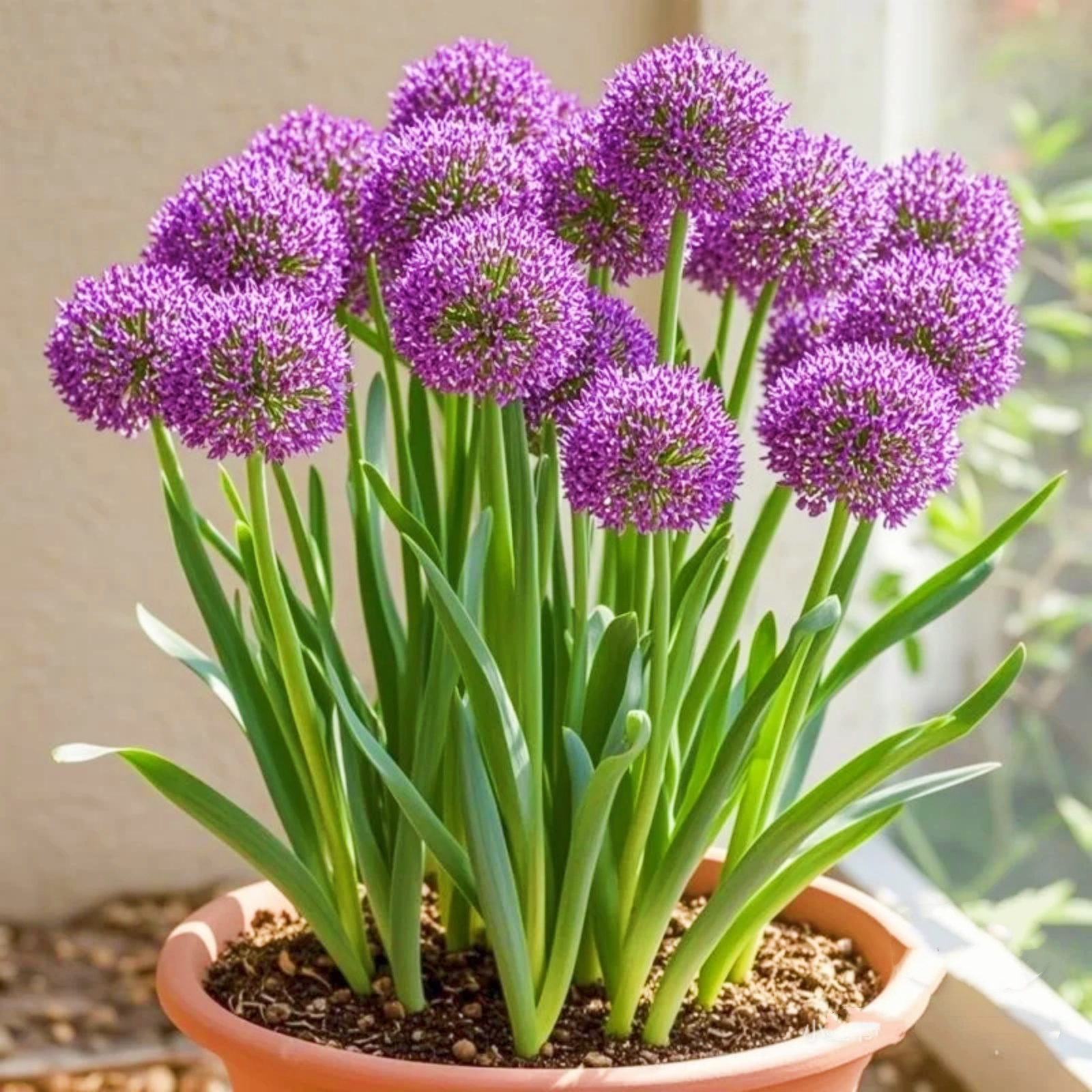
There is nothing subtle about Allium ‘Gladiator’. In late spring it throws a bare, sturdy stem four feet into the air and caps it with a sphere of star-shaped purple florets the size of a grapefruit. It holds that shape for weeks, dries in place, and comes back the following year without any help.
Ready to plant? Shop Gladiator Allium at Alasines → Free U.S. shipping and a 30-day arrive-alive guarantee.
It is also, usefully, one of the few bulbs that deer, rabbits and voles leave completely alone.
Why it works so well
Alliums belong to the onion family, and the whole plant smells faintly of onion — which is exactly why mammals ignore it. Bees and butterflies, on the other hand, find the flowers irresistible, and a Gladiator in full bloom is one of the best pollinator magnets you can plant.
Because the flowers sit on tall bare stems, they also work beautifully in a mixed border, rising above lower planting without hiding anything underneath.
When and where to plant
Plant bulbs in autumn, at the same time as tulips and daffodils — roughly six weeks before your first hard frost.
Choose a position in full sun. Alliums tolerate light shade but flower best with six hours or more of direct light.
Drainage matters more than soil richness. Allium bulbs rot in wet ground, so dig in grit or compost if your soil is heavy clay. A moderately fertile soil is plenty; too much nitrogen produces floppy stems.
Depth and spacing
- Depth: plant so the base of the bulb sits about six inches below the surface. Deep planting helps hold those tall stems upright.
- Spacing: eight to twelve inches apart. Closer planting is fine visually but you will want the airflow once the foliage matures.
- Orientation: pointed end up. If in doubt, lay it on its side.
If you are planting in a windy, exposed site, plant an inch deeper than usual and consider a discrete stake for the first season.
What to expect in the first year
In year one, growth is modest. The bulb is establishing roots and building up the reserves it needs, so you may get a single flower head, and it may be smaller than the catalogue photograph.
From year two onwards, plants reach full height and you will often see a second smaller flower head on a side stem. Left undisturbed, a colony will slowly spread and can keep going for a decade or more.
About the yellowing leaves
This catches almost everyone out. Allium foliage starts turning yellow and collapsing at around the same time the flowers open — sometimes before.
It looks alarming, and it is completely normal. The plant has finished with its leaves and is now running entirely on the bulb. Do not cut them off while any green remains, and do not feed the plant to try to fix it. This is also why alliums are best planted behind lower perennials, which will hide the fading foliage naturally.
Cutting and drying
Gladiator lasts two to three weeks in a vase, and the seed heads that follow are genuinely beautiful dried. Cut stems when the florets are fully open and about a third of them are showing colour, then condition them in cool water overnight.
If you leave the heads on the plant, they will dry to a stiff, architectural brown-gold that holds shape right through winter. Many gardeners leave them standing deliberately.
Naturalising and dividing
Leave alliums undisturbed. They dislike being moved and flower poorly the year after transplanting. Only lift and divide clumps if they become overcrowded and flowering declines, and do it when the foliage has completely died back.
Propagate from offsets you find attached to the parent bulb, or from seed — though seed-grown plants take several years to reach flowering size.
Common problems
- Stems flopping — usually too much shade or overly rich, soft growth. Plant deeper and hold back on feeding.
- Bulbs rotting — wet soil. Improve drainage or lift and replant.
- No flowers at all — bulbs planted too shallow, in deep shade, or undersized.
- Small flower heads — often the first-year effect described above; give it another season.
Where to start
Our allium bulbs are graded for size, which matters a great deal with this genus — a bigger bulb simply means a bigger globe. Browse the full bulb collection to build a sequence that runs from early crocus through to these June giants. Free shipping on every order, with a 30-day arrive-alive guarantee.
Shop the plant
Gladiator Allium Bulbs
Free U.S. shipping · 30-day arrive-alive guarantee · Ships in 1–2 business days.