
Blog
Peony Types Explained: Herbaceous, Tree and Itoh – Which Should You Grow?

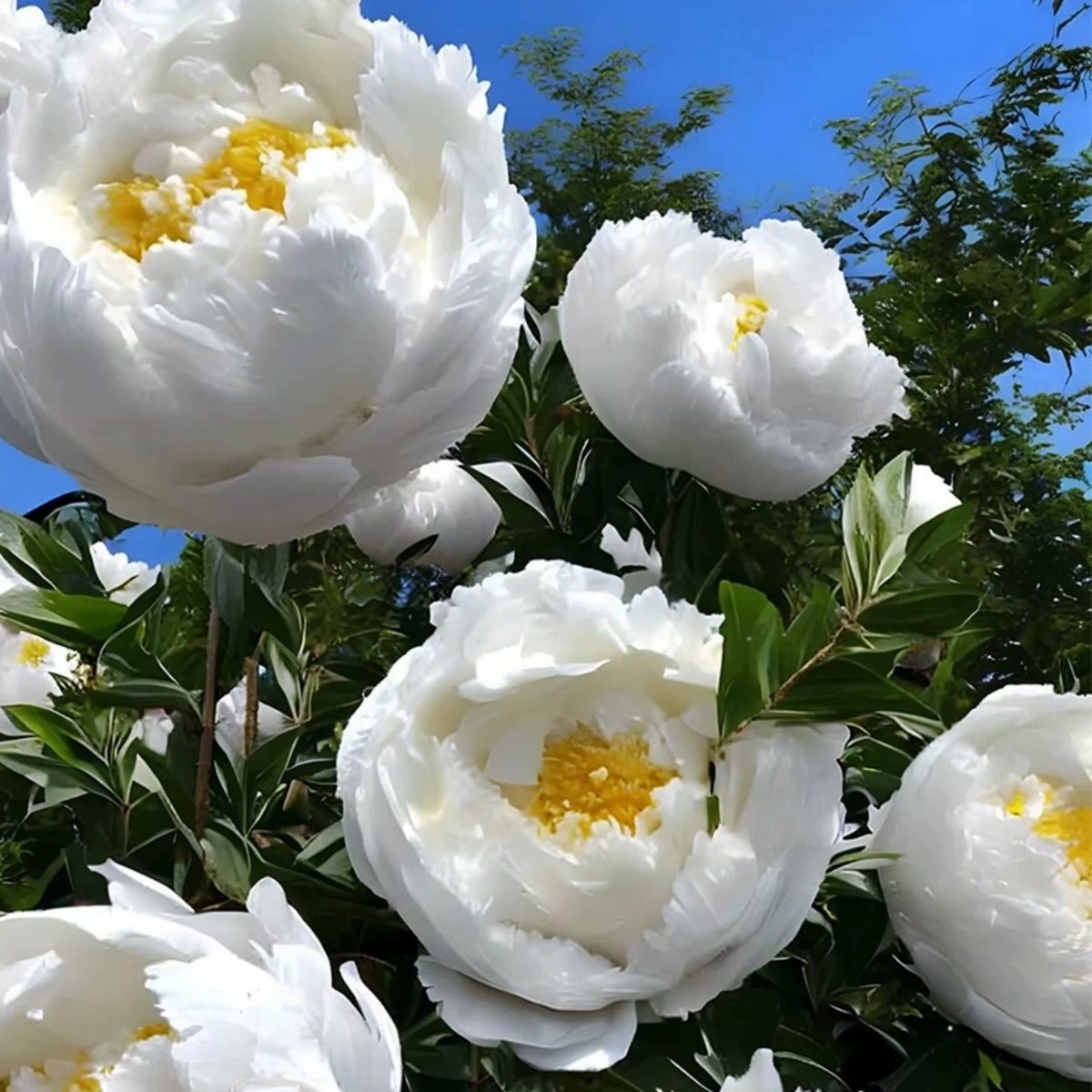
Most peony disappointments trace back to a single mistake made at planting time: the wrong type, planted at the wrong depth. The three kinds of peony look similar in a catalogue photograph and behave nothing alike in the ground.
Here is what actually separates them, and how to pick the one that suits your garden.
The three types at a glance
- Herbaceous peony (Paeonia lactiflora) – dies to the ground every autumn, blooms late spring to early summer, the classic cut flower.
- Tree peony (Paeonia suffruticosa) – woody stems that stay above ground all winter, blooms two to three weeks earlier, usually grafted.
- Itoh peony (intersectional) – a hybrid of the two: herbaceous stems and habit, tree peony flowers and colour range.
Herbaceous peonies: the reliable workhorse
This is what most people mean by “peony”, and what is usually sold as bare roots in autumn. The foliage dies back completely each winter and re-emerges from buds – “eyes” – at the crown in spring.
- Hardiness: zones 3-8, the most cold-tolerant of the three.
- Bloom: late May into June in most of the country. The latest of the three.
- Planting depth: eyes 1-2 inches below the soil surface. Deeper than that and the plant grows leaves for years without ever flowering. This single detail causes more failures than anything else.
- Best for: cut flowers, massed borders, cold climates, and anyone on a budget – they are the least expensive per plant.
They want full sun and a spot that does not sit wet in winter. Once established they can live for decades without being lifted.
Tree peonies: earlier flowers, woodier habits
Tree peonies are shrubs. The stems persist through winter and the plant slowly builds a woody framework, which is why they cost more and why they take longer to settle in – two or three years before they look impressive is normal.
- Hardiness: zones 4-8.
- Bloom: two to three weeks ahead of herbaceous peonies, which matters if you want early colour.
- Planting depth: this is the critical difference. Most tree peonies are grafted onto herbaceous roots, and the graft union must sit 2-4 inches below the soil line. Plant it shallow and the herbaceous rootstock throws suckers that take over while the tree peony starves.
- Best for: a specimen plant, light afternoon shade, gardeners willing to wait.
The woody stems are slower to establish but they do not need staking, and the flowers are noticeably larger than most herbaceous varieties.
Itoh peonies: the best of both, at a price
Itoh – also called intersectional – peonies behave like herbaceous plants above ground and flower like tree peonies. The foliage dies back each autumn, so you get none of the woody stem fuss.
- Hardiness: zones 4-9, the widest range.
- Bloom: mid-season, between the tree and herbaceous types.
- Planting depth: treat like herbaceous – eyes 1-2 inches below the surface.
- Best for: a long season, yellow and copper colours that herbaceous peonies do not offer, and heavy flowering – a mature Itoh carries far more blooms per stem than either parent.
The catch is price. Itoh roots cost several times what a herbaceous root does, and they sell out early.
Why the planting depth rule differs
Herbaceous and Itoh peonies flower from crown buds. If those buds end up buried too deep, the plant spends its energy pushing leaves up through extra soil and never initiates flowers. Shallow planting feels wrong – the eyes look exposed – but it is what the plant wants.
Tree peonies are the opposite problem. Their own roots are weak, so they are grafted onto herbaceous rootstock. That graft line has to go underground so the tree peony can root on its own. Leave it above the surface and the rootstock takes over.
So the same question – how deep? – has opposite answers depending on which type you bought. This is what the fall planting guide covers in detail.
Stagger the three and you get eight weeks of flowers
Because the bloom times differ, a garden with all three types flowers from early May to late June:
- Tree peonies open first.
- Itoh peonies follow about ten days later.
- Herbaceous peonies finish the season.
If you only have room for one and want flowers as early as possible, take the tree form. If you want cut flowers by the armful, herbaceous. If you want the longest display from one plant, Itoh.
Common mistakes worth avoiding
- Planting herbaceous peonies too deep. The most common reason a healthy peony never blooms.
- Planting tree peonies too shallow. Produces a thicket of herbaceous suckers and no tree peony flowers.
- Too much nitrogen. Rich compost or lawn fertiliser pushes leaves at the expense of flowers. A low-nitrogen feed in early spring is plenty.
- Moving them. Peonies resent disturbance and may sulk for two seasons after being lifted.
- Spraying the ants. Ants on peony buds are feeding on nectar, not damaging the flower. They leave when the bud opens.
Frequently asked questions
How do I tell which type I bought?
Look at the root. Herbaceous and Itoh roots are a cluster of fleshy storage roots with buds at the crown. Tree peonies arrive as a woody stem piece with a visible graft union – a swollen junction between thick roots and a woody top.
Can I grow tree peonies in a cold climate?
Yes, to zone 4. They are actually less tolerant of warm winters than herbaceous peonies, which is why they struggle in zone 9 and above.
Do peonies need support?
Double herbaceous varieties usually do once the flowers are wet and heavy. Tree and Itoh stems are sturdier.
Why did my peony bloom the first year and never again?
Almost always planting depth, or the plant was moved and is re-establishing. Check the crown depth first – it is the cheapest thing to rule out.
Our peony collection carries herbaceous bare roots in pink, red, white, yellow, purple and coral, plus the tree forms.
If your plant is established and still refusing to flower, the seven reasons a peony will not bloom covers the diagnosis in order. Growing the tree form specifically? The tree peony guide goes deeper on grafted plants.
Also in this series: Desert Rose Winter Care · Iris Winter Care and Dividing
Every bare root ships with our 30-day arrive-alive guarantee.
Shop related: Pink Peony Bulbs – Pink, Rose & Magenta Shades · White Peony Bulbs – White, Ivory & Cream Shades · Coral Peony Bulbs – Coral & Salmon Shades