
Blog
Rain Lilies Not Blooming? 6 Reasons and the 10-Day Fix


Rain lilies are sold as the easiest bulb you can grow, which makes it doubly annoying when you get a summer of green leaves and not one flower. In most cases it is not the bulb’s fault and it is not disease. It is one of six things, and five of them are about water.
1. You never let the soil dry out
This is the big one, and it accounts for more disappointment than everything else combined. Rain lilies flower on a change in moisture, not on moisture itself. If the bed is watered twice a week by irrigation, or the pot sits in a saucer of water, the bulb never gets the signal and simply keeps making leaves.
The fix is uncomfortable but simple: stop watering. Let the top 5–8 cm go properly dry, then soak the ground until water runs. Two days later you will usually see buds.
2. Too much shade
Half a day of sun is the minimum; full sun is better. In shade they survive, spread slowly and flower rarely. If your clump is under a shrub that has grown since you planted, that is your answer — lift and move it in spring.
3. Too much nitrogen
Lawn fertiliser, general-purpose feed, or rich compost pushed onto the bed all push leaves at the expense of flowers. Rain lilies are light feeders. One dose of low-nitrogen bulb fertiliser in spring is plenty; anything more is counter-productive.
4. The clump is overcrowded
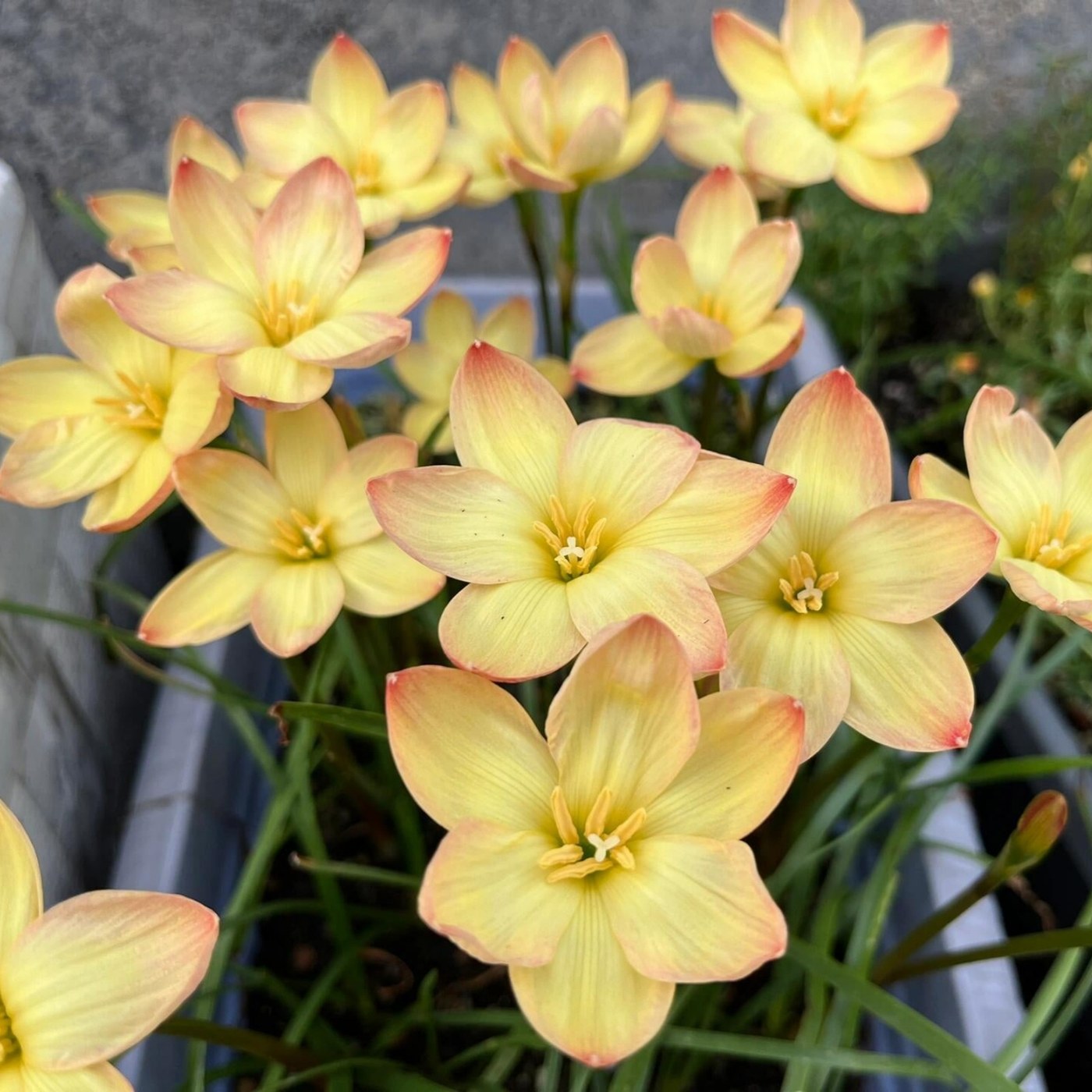
After three or four years the bulbs pack themselves shoulder to shoulder and flowering drops off sharply. This is normal, not a problem. Lift the clump in early spring, tease it apart with your fingers, replant the largest bulbs at 8–10 cm spacing and give the rest away.
5. The bulbs are planted too deep
Three to four centimetres is right, with the neck at or just below soil level. Bury them 10 cm deep like a tulip and they will grow, but flowering is delayed by a season and often skipped entirely.
6. Winter cold or wet killed the roots
In zone 6 and colder, or in a pot that sat wet through winter, the bulbs may be alive but too weak to flower. Check by lifting one: firm and heavy is fine, soft and hollow is not. If they are soft, start again with fresh bulbs in spring and keep them in pots you can move under cover.
The 10-day reset
If you are not sure which cause applies, run this before you dig anything up:
- Day 1: stop all watering. Move pots under cover if rain is forecast.
- Days 1–7: leave them alone. Do not mist, do not feed.
- Day 8: soak thoroughly — a full watering can per pot, or a hose on the bed until the soil is wet to 10 cm.
- Days 9–10: watch for buds. Most clumps respond within 48 hours.
If nothing happens after two rounds of this, the problem is light, crowding or dead bulbs — work down the list above.
When they flower but the flowers are small
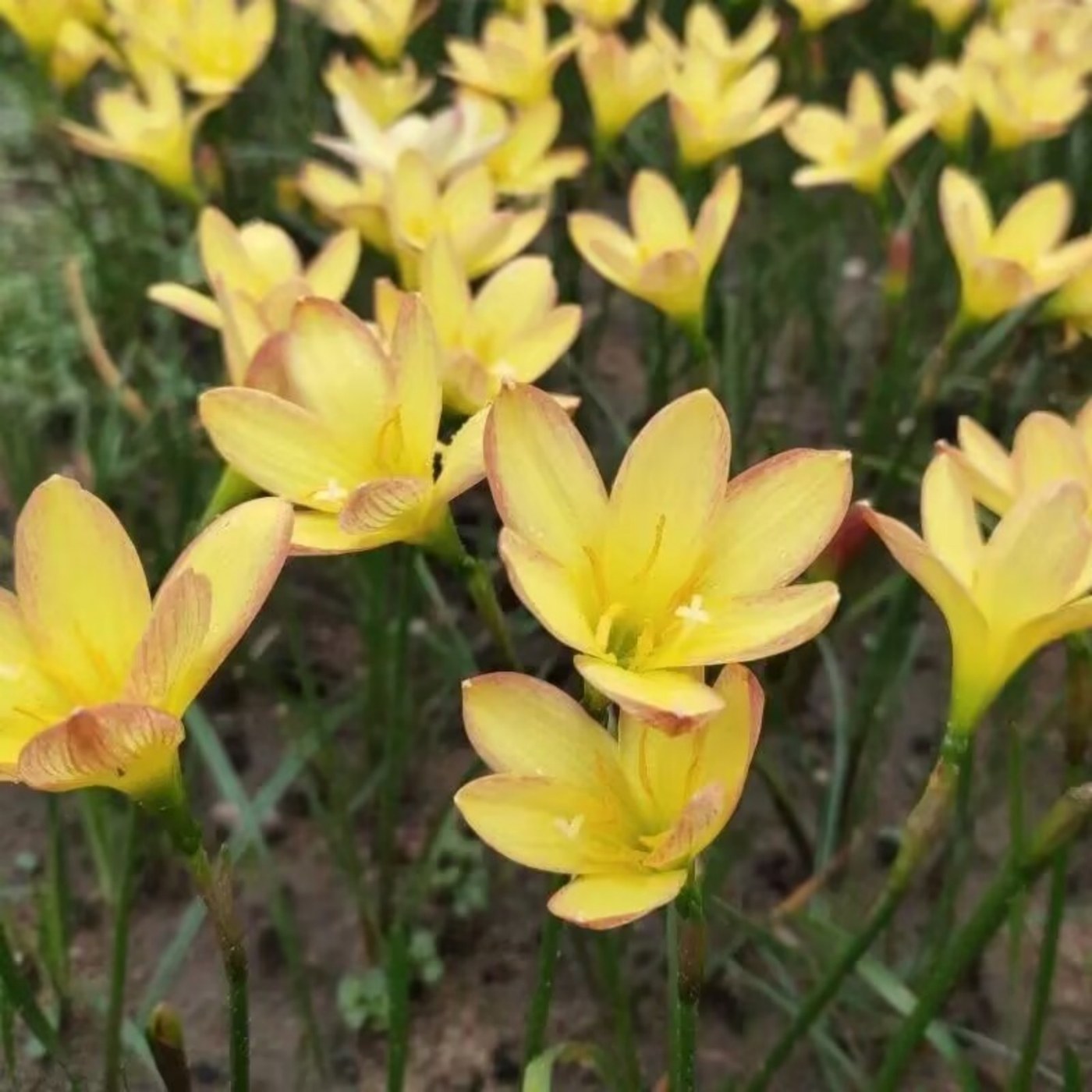
Small flowers on a clump that is otherwise healthy usually means the bulbs are immature offsets, not the original bulbs. A clump left undivided for years produces dozens of small bulbs instead of a few large ones, and small bulbs make small flowers. Division fixes it: lift, keep the biggest 15–20 bulbs, replant, and the flower size comes back within a season.
A second cause is drought during the flush itself. Once buds appear, keep the soil evenly moist until the flowers fade — letting it dry out at that stage shortens the flowering period and shrivels the petals.
Should you feed them at all?
Once a year is enough, in early spring as new leaves push, with a low-nitrogen bulb fertiliser or a handful of bone meal per square metre. Do not feed during the dry-down period and do not feed in autumn. If you garden in poor sandy soil, a light mulch of leaf mould in autumn does more good than any bagged feed.
What “not blooming” usually is not
It is rarely pests. Rain lilies are close to pest-free; slugs nibble the odd leaf and that is about it. It is rarely disease unless the soil is waterlogged, in which case you get rot, not just a lack of flowers. And it is almost never the bulb supplier — if the bulbs were firm on arrival and produced leaves, they are alive and the issue is environmental.
Quick answers
How long until new bulbs flower? Four to six weeks in summer if planted at the right depth in sun.
Do they flower the first year? Usually yes, from 2–3 cm bulbs. Very small offsets take a season to size up.
Will they flower in a pot on a balcony? Yes — pots are actually easier, because you control the dry-down completely.
Should I cut the leaves when they die back? No. Leave them until they are fully brown; they are feeding next year’s flowers.
If you are starting fresh, our rain lily bulbs are graded at 2–3 cm and ship ready to plant. The full growing guide is here.
Read next: Rain lily care guide · Why rain lilies don’t bloom · Forcing bulbs indoors for winter
Shop the bulbs
Rain Lily Bulbs – 6 colours, 3 to 15 bulbs
Free U.S. shipping · 30-day arrive-alive guarantee · Ships in 1–2 business days.